 NexSHOPX-官方新闻
Let's start with the conclusion: the overseas account delivery process consists of six steps—order and category confirmation, credential delivery, first login, credential sovereignty transfer, acceptance confirmation, and after-sales window. What truly determines whether "delivery is complete" is not successful login but the fourth step, credential sovereignty transfer. On May 28, 2026, Google Workspace announced that Device Bound Session Credentials (DBSC) is enabled by default in Chrome 146 and above for Windows, binding login session cookies to the device's hardware TPM. In December 2025, Telegram launched native Passkey across all platforms, configurable under Settings > Privacy and Security > Passkeys. These two changes directly altered the acceptance criteria for overseas account delivery: being able to log in and receive SMS no longer means you control the account.
Step 1: Order and Category Confirmation: Three Things to Confirm Before Ordering
Ordering may seem like just selecting a product and paying, but it's actually the step in the entire overseas account delivery process with the most information asymmetry. It's recommended to confirm three things before payment:
- Whether the account category and intended use match. Different platforms have vastly different restrictions on account usage. Whether you use the same account for advertising, e-commerce operations, or development testing will result in different probabilities of triggering risk control. Decide what you're buying it for first, then choose the category.
- What credentials the seller promises to deliver. Is it just the username and password, or does it include the recovery email, 2FA seed, session files? This directly determines whether subsequent acceptance can pass—see Step 2 for details.
- What scenarios the after-sales covers, the time limit, and the channel for submitting materials. Confirm these in advance to avoid scrambling when problems arise.
As for "how long does overseas account delivery usually take," there's no universal answer. Different sellers have different inventory and delivery methods. Rely on the public descriptions on the product page, not on rumors. The criterion for passing this step is that you've obtained clear answers to the above three questions before ordering.
Step 2: Credential Delivery: What Overseas Account Delivery Typically Includes
"What does overseas account delivery typically include" is the most common question from buyers. Different deliverables have completely different security implications and should not be conflated:
- Account password: Just an entry point—proves the current credential combination is valid, not ownership.
- Recovery email/phone: The recovery channel. Whoever controls the recovery channel can reset the password.
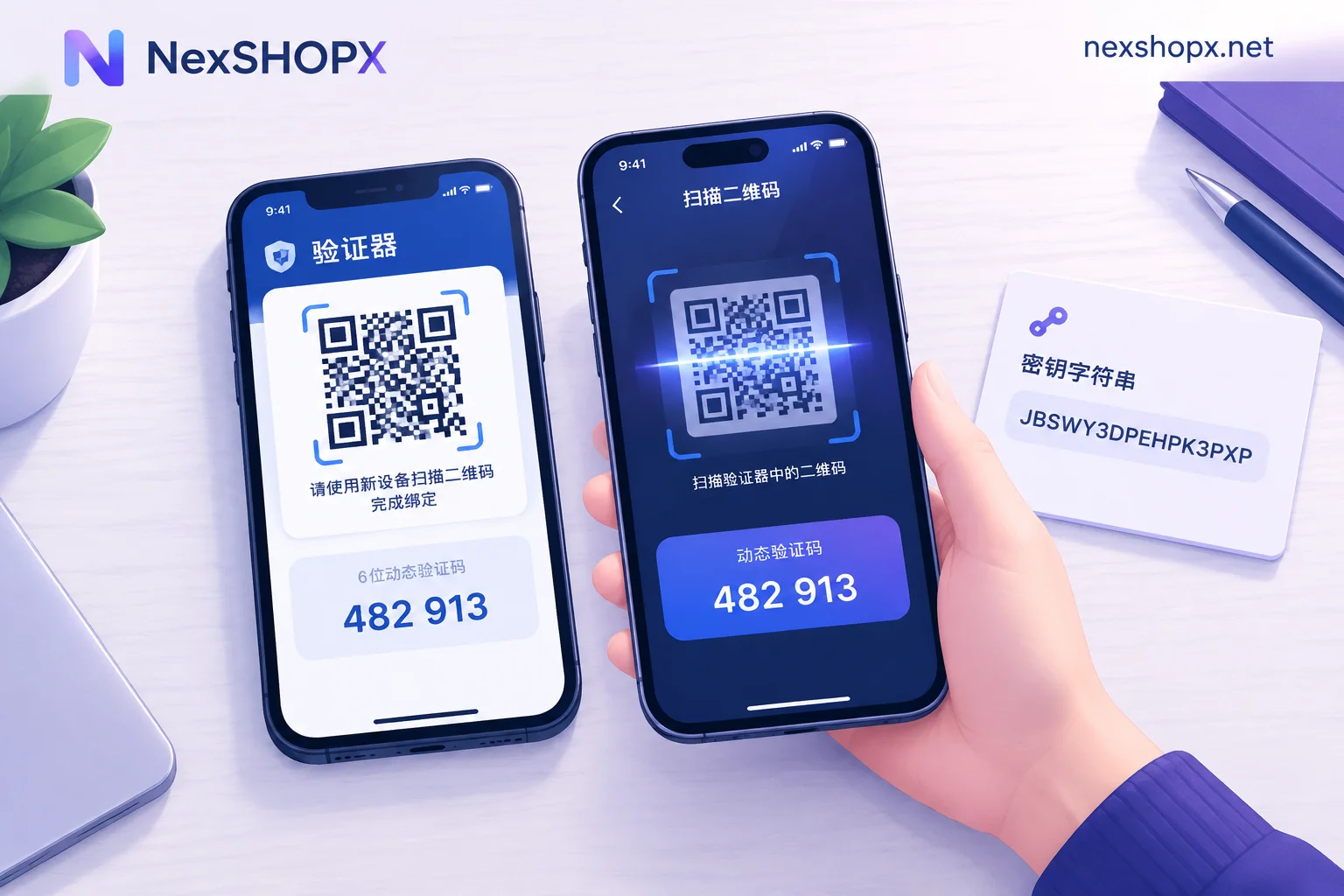
- 2FA seed or authenticator: Control credential used to generate dynamic codes.
- Session files/Cookie: A single login state, not the credential itself.
Here's a direct answer to a frequent question: "Does the seller only providing the account password count as delivery complete?"—No. Only giving the password means the recovery channel and 2FA are still in the previous holder's hands; they can reset the password and take the account back at any time.
The criterion for passing this step is: you've received the list of deliverables and know the security nature of each.
Step 3: First Login: Successful Login Is Only the Minimum Threshold, Not Delivery Completion
Successful first login only proves the current credentials are valid, not that ownership is in your hands. During login, observe three key points:
- Whether additional verification is triggered and which phone or email the code goes to;
- Whether there are unfamiliar devices in the device list;
- Whether there are login records that don't belong to you in active sessions.
Pay special attention to where the verification code is received. If the code is sent to an email or phone you can't access, it means the recovery channel is still with the previous holder. In that case, successful login actually indicates the account could be taken back at any time.
The criterion for passing this step is: login succeeds without triggering verification requests sent to channels you don't control.
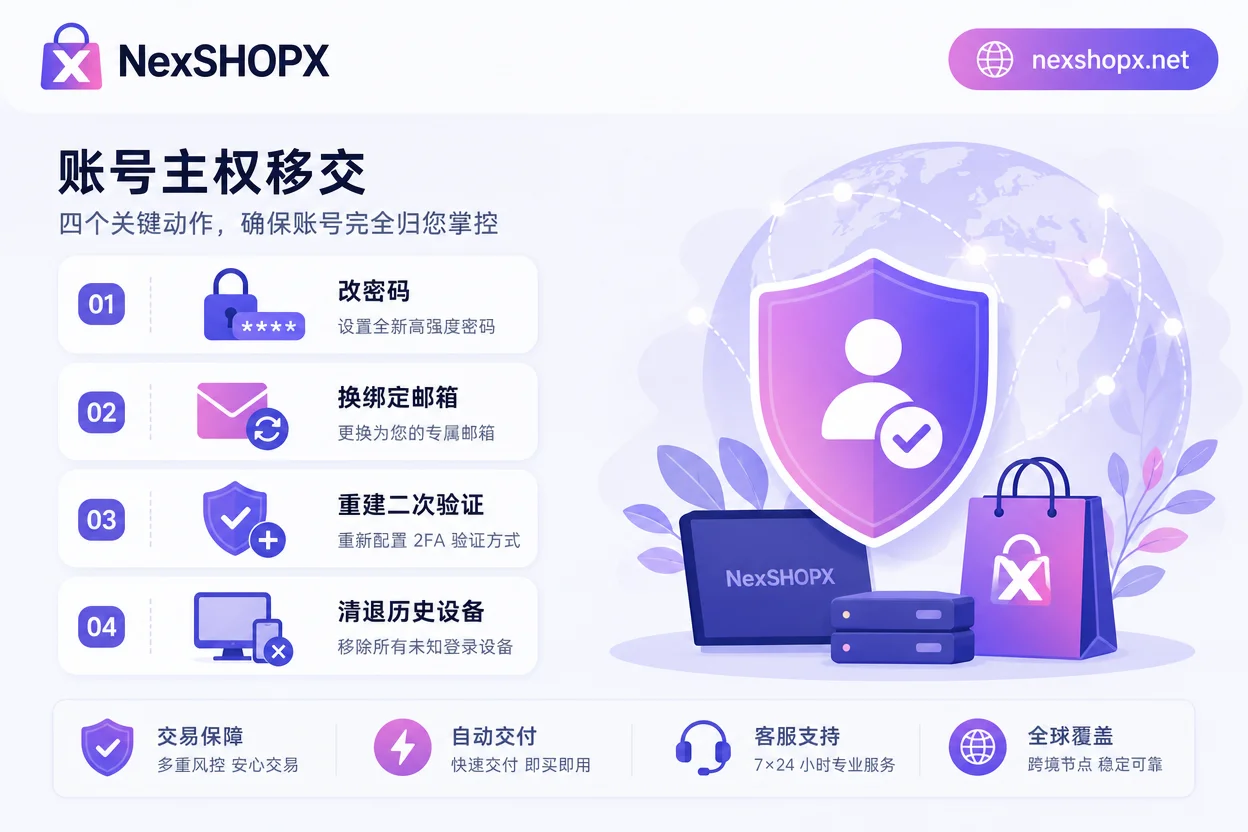
Step 4: Credential Sovereignty Transfer: Why This Step Is the Heart of Acceptance
The fourth step is the core of the entire overseas account delivery process. Sovereignty transfer includes the following actions:
- Change the password;
- Switch the recovery email/phone to one you control;
- Rebuild 2FA and remove the previous holder's authenticator;
- Register your own Passkey or passkey;
- Revoke historical devices and active sessions.
Why emphasize this step? Because after Telegram launched native Passkey in December 2025, "being able to receive SMS codes" no longer equals controlling the account. Passkey uses device-side private keys for verification; even if you can receive SMS codes, if the previous holder still has a registered Passkey, they can still log in with device biometrics or PIN. Similarly, with DBSC binding session cookies to the device TPM, simply transferring session files no longer completes control transfer.
This means the acceptance focus must shift from "being able to log in" to "whether credential sovereignty has been transferred." For more details, see the article on account delivery security.
The criterion for passing this step is: all recovery channels point to you, the 2FA and Passkey lists contain only your records, and the device list has been cleared of the previous holder's devices.
Step 5: Acceptance Confirmation: What to Check on the Day of Receipt
The answer to "what to check on the day of receipt" boils down to four observable criteria:
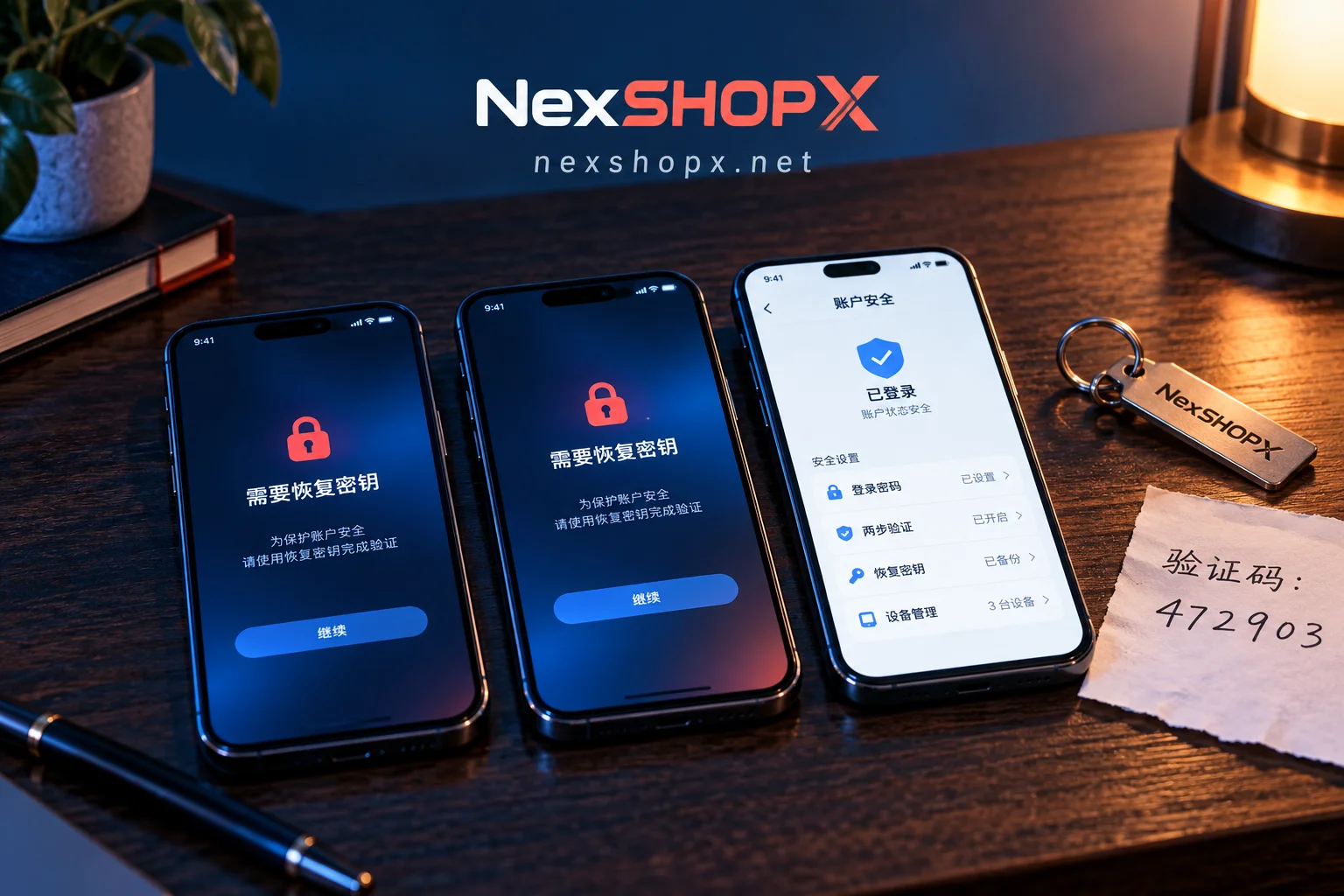
- Recovery channel: Password reset requests go to an email/phone you control;
- Active sessions: The session list contains only your devices;
- 2FA and passkeys: The list contains only records you registered;
- Independent re-login: After logging out, you can log in again independently with your credentials.
Only when all four are met can acceptance pass. It's recommended to screenshot each item and record timestamps—these materials may be needed during the after-sales window. If you encounter login failures during acceptance, refer to the troubleshooting in account login failure guide.
Step 6: After-Sales Window: What Screenshots and Timestamps to Submit
"How long after delivery does after-sales expire" varies; the after-sales period is based on the seller's public statement. The key is what materials to submit within the window:
- Login and operation timestamps;
- Full screenshots of error pages;
- Where the verification code was received (your channel or the previous holder's);
- Screenshots of the device list and session list statuses.
Also, distinguish between "delivery issues" and "your own network/environment issues." For example, if other accounts on the same network work fine but the new account doesn't, it's more likely a delivery issue; otherwise, it's environmental. Having all materials avoids missing the after-sales window due to insufficient evidence.
Why Session/Cookie Delivery Cannot Be Used as Acceptance Basis
Direct answer to "Can a cookie-delivered account still be used?": In Google account login scenarios on Windows Chrome 146 and above, DBSC is enabled by default, binding login session cookies to the device TPM. Exporting cookies for reuse on other devices or fingerprint browsers will fail. Other platforms may or may not have device binding—check their announcements—but session files themselves do not constitute sovereignty transfer.
Some tutorials still claim that "getting cookies or verification codes gives you permanent control over the account," which contradicts current protocol realities. So session file delivery neither serves as acceptance evidence nor constitutes complete sovereignty transfer.
Comparison Table of Different Delivery Forms: Which Step Each Lacks and Who Bears the Risk
| Delivery Form | Steps Involved | Missing Step | Acceptance Can Pass? | Main Risk |
|---|---|---|---|---|
| Password only | Steps 2, 3 | Sovereignty transfer (Step 4) | Cannot pass | Previous holder can recover at any time |
| Password + recovery email | Steps 2, 3 | Rebuild 2FA and Passkey | Incomplete | Authenticator still with previous holder |
| Password + email + 2FA transfer | Steps 2, 3, 4 | Clear historical sessions | Generally can pass | Previous device may still have login state |
| Session files/Cookie | Step 2 | Sovereignty transfer (Step 4) | Cannot pass | Invalid after DBSC binding |
Where NexSHOPX Can Help in This Process
NexSHOPX provides accounts for Instagram, Google/Gmail, Facebook, TikTok, Telegram, Threads, Apple ID, Outlook, LinkedIn, ChatGPT, and more, with self-service ordering and category search on the store, corresponding to Step 1's order confirmation; fast delivery corresponds to Step 2. In Step 6, NexSHOPX offers 24/7 Telegram customer service and limited-time after-sales for login failures, helping buyers distinguish delivery issues from environmental issues. For relevant categories, refer to social media account marketplace and buy Telegram accounts to understand delivery specifics for different categories. No delivery process can guarantee long-term account viability; compliance with the target platform's terms remains the buyer's responsibility.
Compliance Reminder: Target Platform Terms, Local Laws, and KYC Requirements
No matter how complete the delivery process, it doesn't change the constraints of the target platform's terms. Before use, confirm the target platform's requirements for account transfer, KYC, and identity verification, and comply with local laws. Process verification only reduces information asymmetry; it cannot bypass reviews or identity checks.
FAQ
How long does overseas account delivery usually take?
There's no standard delivery time; it depends on the seller's inventory and delivery method. Some products support instant self-service delivery, while others require manual processing. Follow the public description on the product page; don't set expectations based on rumors.
Does the seller only providing the account password count as delivery complete?
No. Only providing the password means the recovery channel and 2FA are still with the previous holder, who can reset the password and take the account back at any time. At minimum, delivery should include the recovery email or 2FA transfer to be considered complete credential delivery.
What's the minimum to check on the day of receipt?
At least four items: whether the recovery channel points to you, whether active sessions only include your devices, whether the 2FA and Passkey list has any records from the previous holder, and whether you can log in independently with your credentials after logging out. Only when all four pass is acceptance complete.
Can a cookie-delivered account still be used?
In Google account login scenarios on Windows Chrome 146 and above, DBSC is enabled by default, so exported cookies will fail when reused on other devices. Even if it works currently, it's not stable and cannot serve as an acceptance basis.
What materials should I prepare within the after-sales window?
Prepare four types: login and operation timestamps, full screenshots of error pages, explanation of where verification codes were received, and screenshots of device and session list statuses. Also, distinguish between delivery issues and your own network issues. The more complete the materials, the faster the resolution.


Comments(0)